An AI Bought a Tesla

Posted September 02, 2026
Chris Campbell
Recently, an AI bot ordered a Tesla.
By itself.
The user asked. It went shopping. It checked out. A screenshot went around X.
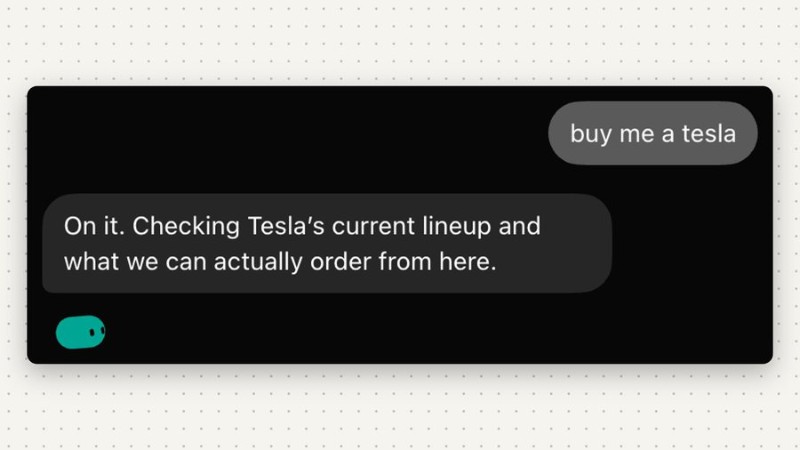
While it might not sound like a huge leap, mark today’s date.
Because something crossed a line that's been holding for thirty years of internet commerce: the machine touched the money.
Here's what just happened… and what's coming. Fast.
Some of it’s good. But there’s ugly things too.
Payment Bots Are Here
You already know AI assistants that answer questions. A payment bot is an assistant with purchasing power.
You say: "Find me a carry-on that arrives by Friday." It searches every retailer, compares reviews, checks delivery, fills the cart—and pays.
The plumbing arrived this year.
Grok Bot now buys things through an integration with Stripe.
ChatGPT has a checkout that lives inside the chat. Amazon and Google are building their own.
The pipes are laid.
How it Works
Here’s the good part.
Systems like Grok Bot never sees your credit card.
Instead, when it wants to buy something, you get a ping on your phone: approve or deny.
Approve, and the system issues the bot a single-use virtual card—good for one purchase, at one store, capped at one amount.
Then the card dies. If the bot malfunctions or a website tricks it, the damage is limited to one capped card.
So today's setup is: robot does the shopping, human taps the button, disposable card pays.
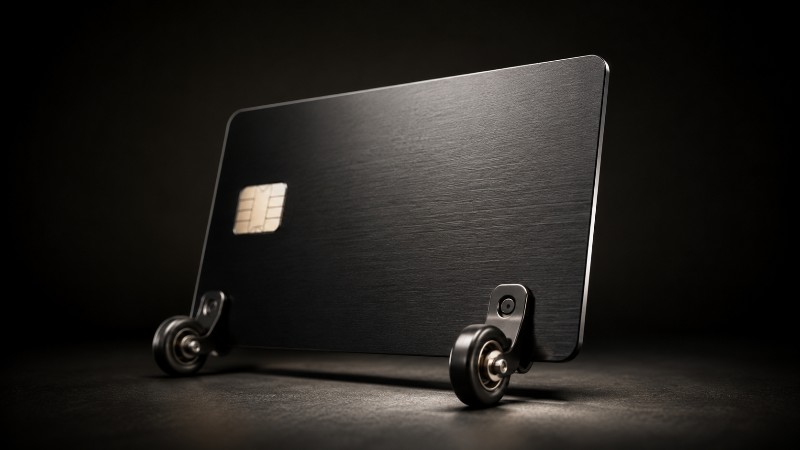
Call it agentic shopping with training wheels. But slowly, the training wheels are coming off.
It’s Already Here
Notice who's already riding without training wheels.
Bots already pay bots without humans through a protocol Coinbase created called x402.
An AI agent rents its own computing power, buys the data it needs, and hires other agents to do jobs it can't, no human tapping approve, just a spending cap and a green light.
There are AI-run businesses today with no employees at all: the software registers the domain, stocks the store, answers the tickets, and pays every bill itself.
It works fine. Nobody panics.
The consumer version will arrive the same way, just politer. You won't approve each purchase forever—that's friction, and tech treats friction like a disease.
Instead you'll approve a standing budget once: "$60 a week on groceries, $40 a month on household stuff."
A signed permission slip for the robot. After that, it buys on its own, inside the fence.
Sounds reasonable.
Pet food, toilet paper, paper towels—purchases you'd happily never think about again.
The industry's own surveys say that's exactly where trust starts: the boring stuff first, then up the value chain, one successful delivery at a time.
BUT…
Here's the question to sit with.
The day you approve that budget is the day you stop looking at prices. That's the point. That's the product. Freedom from the checkout.
But prices still get set. Just by machines, for machines.
The store's algorithm on one side, your bot on the other, negotiating over your money billions of times a day with nobody watching either side.
So ask who your bot really works for. And what happened the last time machines set prices with no human looking.
I looked. The answers are documented, peer-reviewed, and worse than you'd think.
German gas stations. Apartment rents. A DOJ lawsuit. Every time algorithms face off over a price, the same pattern shows up. And it's a good reason to worry your shopping bot could join the wrong team.
There's a word for what it does. The headlines haven’t printed it yet, but I suspect they will.
Botflation.
Full story on that tomorrow. Until then, one piece of advice: before you hand any robot your wallet, ask it a simple question.
"Who do you work for?"