Greetings From Nashville!

Posted November 04, 2026
Chris Campbell
Christmas, 1779.
The Cumberland River froze solid.
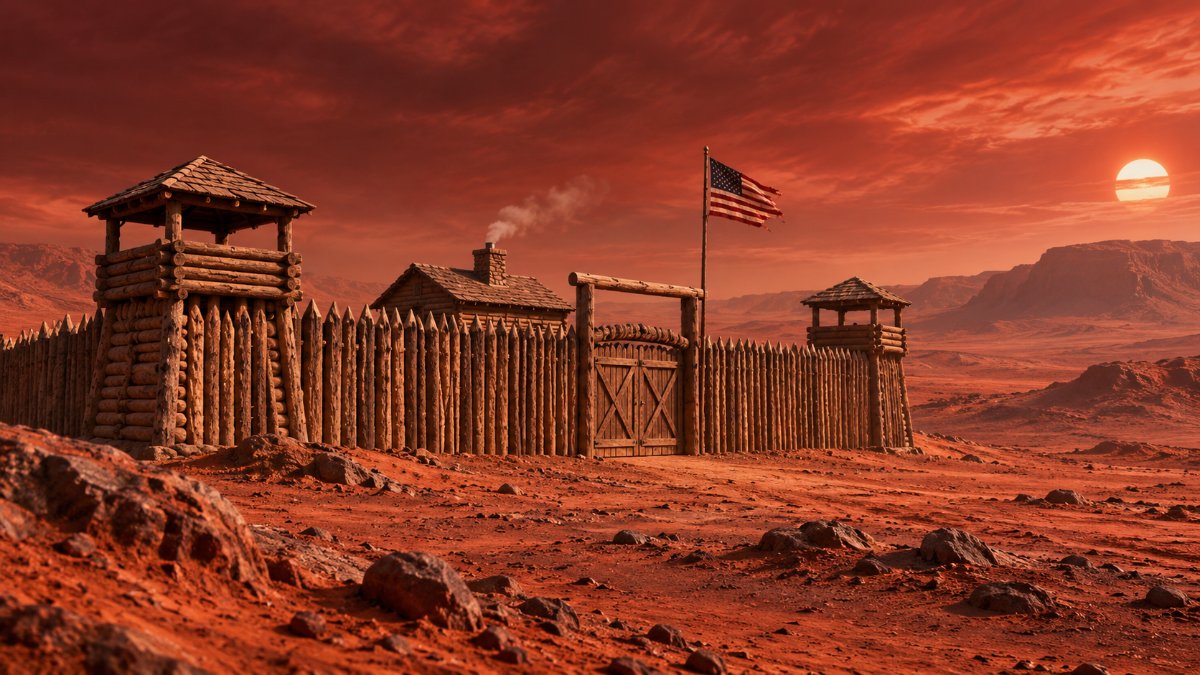
James Robertson and a party of settlers walked their horses and cattle across the ice. On the far bank, they built a log stockade and named it Fort Nashborough.
It sat hundreds of miles past the edge of the map. It had no roads, no army and no help coming.
Back east, the government had a revolution to fight. So in the spring, the settlers wrote their own rules and called them the Cumberland Compact.
That fort became Nashville, Tennessee.
That’s where we’re headed today. Tomorrow is our annual Paradigm Shift Summit: one room, one day, our whole team.
I’ll be reporting from the floor.
JC Parets will talk about the sectors lining up for the next big run. Byron King on critical metals and the return of American manufacturing. Chris Cimorelli on the next 100-bagger AI chip. Then Jim Rickards and James Altucher go head-to-head in the debate of the decade.
Every speaker on that agenda is staking a claim past the edge of the map. And, as it happens, amidst all the election chaos, the President just staked one too.
The “Mars-a-Lago” Accords
On Election Day, while America voted, Trump signed a proclamation titled "The American Declaration of Freedom in Space."
It declares the solar system and all of outer space "the province of all humans." Space, it says, is "open to exploration, development, use, and the establishment of a permanent presence by American citizens."
Permanent presence.
A 1967 treaty says no nation can claim the Moon. The proclamation honors it. Nobody’s planting a flag and calling the Moon the 51st state.
The treaty says nothing about who builds first. As Robertson’s settlers understood: whoever builds first writes the rules.
What you build up there is yours. What you mine up there is yours. Congress said so in 2015.
The new proclamation adds a schedule. Return to the Moon by 2028. A permanent American base on the lunar surface. The first human footprints on Mars.
That raises a lot of questions. One of which:Who’s going to get Americans there?
One man owns the fleet.
NASA picked SpaceX's Starship to land its astronauts on the Moon. SpaceX flies the overwhelming majority of American launches. Elon has talked about Mars for more than 20 years—and for most of that time, people laughed. And yet.
Who Builds the Forts?
Every frontier rewards the same people. They show up early, they build, and they stay.
Robertson's crew did it on the Cumberland. Elon’s doing it 240,000 miles up.
In Nashville, every speaker on our stage is mapping their own edge: AI, metals, aging and chips. Some of those ideas will sound as crazy today as the Cumberland Compact did in 1779.
I'll send you what I hear.
Stay tuned,