Hollywood’s Big Lie (A.I.)

Posted July 21, 2023
James Altucher
When Gabby Giffords left home, she didn’t expect to get shot in the head in a Safeway parking lot.
But that’s what happened.
On January 8, 2011, the congresswoman was holding a meeting with constituents when Jared Lee Loughner came up and shot her point-blank.
Doctors performed emergency brain surgery on Giffords and then put her into a medically-induced coma so her brain could heal.
Four days later, she opened her eyes.
She couldn’t see anything. She couldn’t speak, either.
But she was alive.
To restore her speech, her brain had to craft brand new pathways.
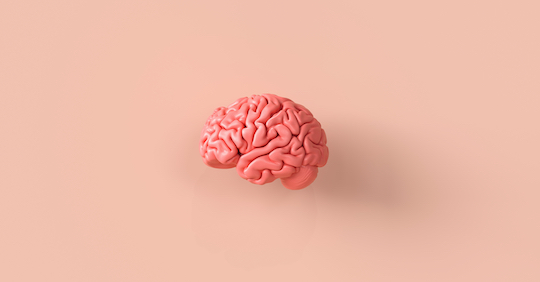
This ability of the brain to adapt and heal, to rise from the ashes of trauma, underscores its astounding versatility.
This Isn’t Your Brain on AI
People often compare a computer to a brain.
It’s not a brain.
If you cut a piece out of a brain, it will reroute pathways to compensate.
If you take out a piece of a computer, it won’t work.
Simple.
Everything stored in your computer has an address. If that spot’s erased, that file is gone forever.
The same doesn’t apply to memories, stored nonlocally throughout the brain. At least, that’s how it seems.
Understanding computers is way simpler than understanding brains.
You can take your desktop computer apart right now and see how it all connects. Anyone can understand a computer.
Programming is just math. AI is just statistics.
Consciousness is something else entirely.
Brains are difficult to understand completely, even by experts.
That’s why a lot of the AI hype is a tad overzealous.
Blame Hollywood
For decades, we’ve been immersed in Hollywoodized ideas about artificial intelligence.
Commander Data, the lifelike cyborg of Star Trek: The Next Generation.
HAL 9000 of 2001: A Space Odyssey.
Joaquin Phoenix’s AI sweetheart in Her.
Jarvis, Iron Man’s assistant.
All figments of Hollywood imagination.
It doesn’t help that Silicon Valley desperately wants the robot butler to be real.
(Mark Zuckerberg built an AI-based home automation system named Jarvis.)
Hollywood AI is called artificial general intelligence, or AGI.
While AI systems are becoming more capable and versatile, the timeline for achieving AGI is far from certain. Some experts suggest it could be decades away, while others believe it may take a century or more, or may not be achievable at all.
AGI is the object of our desires and fears. Narrow AI is what we have.
Narrow AI is a mathematical method for prediction.
It can give you the most likely answer to any question that can be answered with a number. It’s simply statistics on steroids.
Pretty boring, right?
Well, as James puts it below, “Boring doesn’t mean unprofitable.”
Below, he gives the full scoop.
Read on.
What Everyone Misses About AI
James Altucher
It’s no secret that AI has captured investors' imaginations. The folks on CNBC can’t help but report on things like ChatGPT every chance they can.
But here’s the thing.
When I gather my team around the virtual conference room and take their temperature on AI, one thing continues to be said: AI will have a dramatic profit-based impact on boring businesses where few investors are looking.
Boring doesn’t mean unprofitable.
But look, AI will continue to have a material impact in an industry like tax, accounting, medical devices, health care, and financial services. And from there, it’ll be in things like manufacturing and tooling.
But all we hear about today is ChatGPT.
Large Language Models (LLMs) are cool and useful, but it’s far from what’s coming.
Goldman Makes a Risky Bet on Chinese AI
I’ve said this before, but it’s worth repeating; The US and China have been in a “cold war” for years.
Trade disputes, cyber-attacks, piracy, foreign policy disagreements -- you name it!
Today’s battle du jour is AI supremacy.
You probably already know that the US restricted the export of specific AI processors to China. NVIDIA responded by making its Chinese customers a weakened processor, but now the government may also be stopping those.
The bottom line is the U.S. government isn’t interested in helping China compete against the other, friendlier nations in the race for AI supremacy.
Knowing this...
Isn’t it odd that Goldman issued a couple of research notes to clients around the middle of this month, naming three Chinese stocks as opportunities (albeit not free from risk) in the AI space?
The three companies Goldman highlights are Baidu, Alibaba, and Tencent.
The analyst on the report is Ronald Keung. I understand the need for diversity, and just merely among industries.
Diversity among countries is worthwhile as well.
But when we’re talking about communist regimes, risk management needs to be placed well above everything else.
To Ronald’s credit, he’s clearly looking at generative AI's impact on cloud computing to justify his bullish bias.
My team and I are very familiar with these companies. We’ve followed them for years. And for the most part, they’re excellent companies.
Unfortunately, we live in a world where most Chinese-based companies are uninvestable due to the unpredictable nature of the Chinese government.
Oh, and let’s not forget what we already know; The U.S. government is hellbent on restricting Chinese companies from accessing the chips necessary to make AI-based tech really hum.
The bottom line is Ronald may believe Alibaba is cheap on a valuation basis, and Tencent may be a rockstar in the world of advertising and payment recovery, but, and I’ve seen this repeatedly over my career, until there is massive political reform in China, investing in its economy is very risky.
But hey, if someone convinces Tencent to sneak out of the country in the middle of the night and set up shop in a capital-friendly country, I’ll be the first investor through the door to reevaluate it.
As always, we’ll continue to follow the story as it unfolds and let you know when we find opportunities that are worth the risk. Stay tuned.