How to Mine Crypto With Radio

Posted November 03, 2021
Chris Campbell
In 1999, an 18 year-old dropout, racing against the clock, stared at his screen and then furiously typed. He’d been doing exactly that for days; staring, typing, staring, typing, staring, typing.
Sprawled out in his uncle’s Internet company office (a company called chess.net), he’d already hit 60 hours without sleep. Against all odds, he was going to manifest into reality the idea that had been a splinter in his mind for over a year.
Little did he know; not only would the program work... Time magazine would soon write a story about him. Not just that, they’d put his face on the cover. And they would write about those sleepless nights, too.
“He worked feverishly,” the Time article announced to the world, “because he was sure someone else had the same idea, that any day now some software company or media conglomerate would be unveiling a version of the same application, and then Fanning’s big idea wouldn't be his anymore.”
The kid was Shawn Fanning. The idea was Napster.
All the Rave
“Nobody has ever built a reliable peer-to-peer service,” he later told the New York Times, “where people can really access all the music they want in one location... Once I got it into my head, I couldn't imagine the media space without one.”
And, as he told Esquire: “There was no Internet bubble at the time. My family thought I was playing games and messing around. They had no idea that I was diving into this completely new world. And it wasn't something I knew how to explain, because I was trying to make sense of it myself.” (This, by the way, echoes the experience of many who dive headfirst into crypto.)
Napster would begin a decade-long rollercoaster of screaming highs and desperate lows for Fanning; a story detailed by respected cyber security reporter Joseph Menn in his book, All the Rave: The Rise and Fall of Shawn Fanning's Napster.
Within the next decade, Fanning would get screwed out of the Napster deal by his uncle. He’d hobnob with Silicon Valley’s elite. He’d build a company called Snocap for $5 million and sell it just in time in 2008. Then, the same year, he’d also sell a social network gaming startup for $15 million to Electronic Arts. He’d co-found two more companies after that. And he’d become an early investor in Square and Uber. In short, he’d do pretty well.
Fast-forward to 2013, he’d help create a company called Helium; an innovative project almost too ahead of its time -- until crypto. Today, it’s the fastest, easiest way to earn income by mining crypto while using the same amount of energy as a 5 watt lightbulb.
Things on the Internet
In 2014, during a Hardwired NYC event, Helium co-founder Sean Carey announced Helium’s mission: “Helium,” he explained, “is building physical infrastructure that makes it painless and cheap to get smart devices online and exchanging data without being tied to complex hardware components and protocols.”
In essence, he said, Helium is in the business of “putting things on the Internet” through city-wide mesh networks. Even back in 2014, Helium had hardware bridges that could speak to one another between four and ten miles apart. Furthermore, each bridge could service up to 64,000 active devices. “The idea is,” Carey said, “we want to make it so cheap that your pet rock could connect to the Internet and update your Twitter account. We want to make it so that thousands and thousands of devices can connect and intercommunicate… and be cheaper than mobile.”
Helium was built on a revelation. It’s the same revelation that’s now attracting Big Tech brainpower to crypto: continuing to build our technologies out in a centralized manner no longer makes sense. It’s better to decentralize them, allowing them to operate in a peer-to-peer fashion; just like Napster did, but in overdrive.
Even better, the Helium team found a workaround to the red tape tying down traditional telecommunication companies. The low frequencies used for Helium’s network has no laws, licensing, or regulations attached. LongFi is plug-and-play. The only problem back in 2014 was the lack of incentives. Helium had no ways of convincing people to set up their bridges, so progress nearly grinded to a halt. But then came crypto.
Mine Crypto With Radio
In July 2017, the Helium team discovered the Filecoin white paper, describing a decentralized storage network. The paper said, “The Internet is in the middle of a revolution; centralized proprietary services are being replaced with decentralized open ones; trusted parties replaced with verifiable computation; brittle location addresses replaced with resilient content addresses; inefficient monolithic services replaced with peer-to-peer algorithmic markets.”
This was Helium’s lightbulb moment.
By June 2019, Helium launched its first physical miner hotspot devices, which would power its peer-to-peer IoT infrastructure. “Telcos aren’t our future,” Helium’s website said in bold letters. “You are.” One month later, Helium launched its cryptocurrency HNT. Back in 2019, HNT was a fledgling coin sitting at about 11 cents. Today, it’s a relative beast with almost a $3 billion market cap. By becoming a host and running a miner hotspot in your home, you can earn HNT, which can be traded into cold, hard cash. And, the good news: Mining is easy and still lucrative.
Here’s how it works: Hosts mine HNT and maintain network coverage while enterprises and developers use the Helium network to connect devices and build Internet of Things applications. Once up and running as a host, you don’t have to do anything; your hotspot takes care of it. How does the network make money? Enterprises and developers use the Helium Network to connect devices and build IoT applications. They pay transaction fees for private wireless data transmissions on the network. The Helium network is currently used to track everything from electric scooters to rat traps.
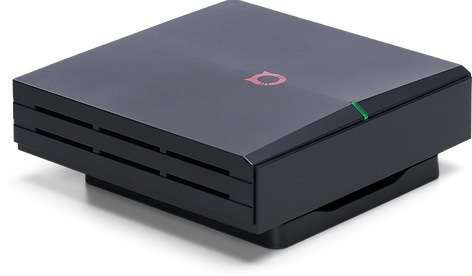
Helium miner hotspots are just like the routers you use for WiFi. Only difference is hotspots don’t transmit a WiFi signal, but a “LongFi” signal, similar to radio, giving Helium a range 200x further than WiFi. Helium hotspots are also connected to the Internet. This makes it possible for developers to request data from any compatible devices within LongFi range. For example, electric scooter company Lime tracks their scooters using Helium with little burden on the scooter’s batteries. Another Helium network user, the rat trap company, uses the Helium network to send notifications when rats have been caught.
When you run a hotspot in your home, you’re rewarded in HNT. Best part? The electricity cost is nearly negligible. The low signal frequency used by LongFi -- on top of Helium’s low-energy “proof-of-coverage” model -- means the Helium miner/hotspot uses about the same amount of electricity as a 5 watt lightbulb. Fortunately, Helium created a great explainer video to bring it all together: click here to watch.
In many cases, users were able to break even with their miners in less than a month… and made up to $2,000 each month afterwards. Upon writing, it’s probably the easiest and coolest way to mine cryptocurrencies. Though you have several choices, our crypto friends recommend the Bobcat hotspots.
You can learn all about the hotspots -- and grab one for yourself -- right here. Also, in the spirit of crypto, the instructions to make a Helium hotspot are open-source: you could even make one from scratch if you wanted. Click here if you’re feeling froggy.
Until tomorrow,
Chris Campbell
For Altucher Confidential