The Anti-Capsule Portfolio For 2026

Posted January 02, 2026
Chris Campbell
Every tailor knows the capsule wardrobe…
A small, carefully chosen set of clothes where every shirt goes with every jacket, every pair of pants works with every shoe, and nothing ever clashes—an easy, low-stress way to get dressed in the morning without having to think.
It’s a fine way to buy clothes. The best, even.
But applied to investing, it builds portfolios that depend on the world staying calm, markets behaving predictably, and stress arriving politely—assumptions that history has a habit of violating, sometimes violently.
Most, whether they admit it or not, still build capsule portfolios. A little growth, a little safety, a little yield. Everything correlated. Everything polite.
Everything optimized for a world that behaves.
The problem? The world no longer behaves. And 2026 has the feel of a year that finds systems where they’re thinnest.
That line of thinking led me to assemble what I call an “anti-capsule” for 2026. Instead of harmony, I’m looking for contradiction. Instead of coherence, I want perpendicularity. Instead of elegance, I aim for uptime.
That’s the point.
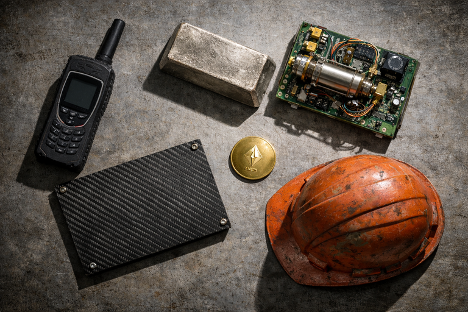
It’s an anti-capsule: five ideas that look terrible together, but each one tied to a different failure mode of modern civilization.
If nothing breaks this year, I’ll revisit these predictions feeling a strange mix of relief and annoyance. If a few things do, I’m betting their relevance will accelerate.
Each prediction includes a catalyst. They don’t necessarily depend on these catalysts, it just adds more fun trying to predict the how as well as the why. Although, the catalysts do reveal fault lines that already exist.
(Note: the picks are not official recommendations, but more a current framework for how stress may surface. That said, full disclosure, I am invested in all of them.)
Today, I’ll share three of five.
Pillar One: Signal Uptime
Iridium Communications (IRDM), a legacy satellite company, represents the hard, unglamorous layer of global communication that survives cyberwar, jamming, remote locations, and infrastructure failure—and in 2026, rising geopolitical and AI-driven disruption makes that kind of ensured connectivity suddenly scarce and valuable.
Catalyst prediction: An AI-assisted geopolitical cyberattack degrades terrestrial communications—routers, undersea cable landing stations, cellular backhaul. High-bandwidth systems fail first. Governments, aviation, maritime, and emergency services reroute traffic through whatever still works. Iridium sits in the spotlight.
Iridium isn’t a consumer story. It’s a hardened, cross-linked, L-band satellite network designed for environments where things go wrong. No reliance solely on dense ground infrastructure. Resilient to jamming. Resilient to weather. Resilient to solar interference (I’ll show you why that matters in a moment).
When towers deteriorate, fiber stumbles, or politics intervenes, Iridium keeps passing packets. That’s why it quietly underpins aviation, maritime operations, military continuity, disaster response, and national command systems.
Investors value Iridium like a legacy telecom, even though its economics resemble an insurance layer for global systems—high-margin, capital-light now that it’s post-buildout, and most valuable under stress.
If communications blink, Iridium gets traffic. And traffic can jump by an order of magnitude without warning.
Pillar Two: Temporal Uptime
Frequency Electronics (FEIM), because any prolonged disruption to GPS timing forces governments and critical infrastructure to rush toward sovereign, non-orbital time sources, and FEIM is one of the few pure-play suppliers positioned to meet that demand at scale. (Note: FEIM has seen a big run recently, pulling forward part of this thesis. Retracement from here short term would not raise eyebrows.)
If Iridium keeps packets flowing when networks fracture, FEIM keeps systems aligned when clocks drift.
Potential scenario: A solar-driven (or geopolitical) disruption renders GPS timing unreliable for an uncomfortable amount of time. This creates an awareness of how systemically important (and fragile) GPS has become.
Right now, we’re entering the peak of Solar Cycle 25 at a time when Earth’s magnetic shielding is measurably weaker in key regions like the South Atlantic Anomaly. This increases the likelihood that even moderate solar storms cause outsized disruption to GPS timing. Moreover, GPS is increasingly unreliable in conflict zones (most recent, Venezuela).
And, thing is, GPS is not primarily a navigation system. It’s a clock. And it quietly synchronizes:
- Cellular networks
- Financial exchanges
- Power grids
- Data centers
- Secure communications
- Aviation and maritime logistics
When timing drifts, systems desynchronize and risk causing cascading degradation: misalignment, retries, dropped packets, halted trading, protective shutdowns.
Fallbacks to GPS exist in theory. But they are not deployed at civilian, commercial, or global scale sufficient to replace GPS timing during a prolonged disruption.
FEIM builds defense-grade oscillators and atomic frequency standards—rubidium, cesium, quantum sensing, and advanced timing systems used in satellites, military platforms, GPS-denied navigation, and secure infrastructure. It represents one of the cleanest exposures to the emerging temporal layer: systems where timing integrity governs survivability.
If GPS time becomes suspect, sovereign time becomes strategic. Procurement shifts fast. Budgets follow. Timing, under those conditions, becomes one of the most valuable assets on Earth.
Pillar Three: Collateral Uptime
Ethereum (ETH) represents a neutral settlement layer where tokenized Treasuries and collateral are migrating. In 2026, a big shift reframes ETH from a speculative asset into financial infrastructure. Ethereum rerates as a result. ($10,000 = base case.)
Potential “mindshift” catalyst: A tokenized Treasury fund on Ethereum surpasses a major Treasury ETF in assets under management. (Think: BUIDL > SHV)
Treasury ETFs matter, but their infrastructure pauses. Tokenized T-bills don’t. Continuous settlement keeps collateral usable during volatility, which is when utility is revealed.
Layer on top of that:
- Global standards (Basel) pushing banks toward more high-quality liquid assets and better collateral mobility
- Regulatory clarity in the U.S. reducing institutional hesitation
- Asia and Europe turning pilot tokenization programs into production rails
- Corporate treasurers demanding intraday liquidity and continuous settlement
The shift doesn’t require stress, but stress is an accelerant. And enough stress—competitive and systemic—could force a behavioral shift that revalues Ethereum as settlement infrastructure.
The Three Uptime Pillars
Each position anchors a different layer of hidden infrastructure:
- Signal uptime → Hardened comms
- Timing uptime → Timing solutions
- Collateral uptime → Credibly neutral settlement
These layers don’t necessarily fail in isolation.
When they strain together—through cyber conflict, liquidity stress, solar physics, monetary divergence, or procurement shifts—capital migrates toward whatever keeps working.
The anti-capsule isn’t very photogenic. But picture-perfect doesn’t usually get the job done.
At least, that’s what I’m predicting.
More to come.
(We’ll revisit the 2026 anti-capsule portfolio in the future to see just how remorseful I should be.)