The Boulder and the Bottle

Posted April 03, 2026
Chris Campbell
Chris’ note: Altucher Confidential has always been about more than the markets. It's about risk, survival, thriving in uncertain times, and what you do when everything goes sideways at once. Today, here’s a personal story about a boulder and the bottle of wine that didn’t flinch—nine years ago, this week.
There's a moment when you're bleeding where you think: huh, that's a lot of blood.
Your brain gets very calm and very stupid at the same time.
Cool cool cool cool cool.
I discovered this during my first week in Guatemala.
It was too dark to find where the blood was coming from—only that it was coming from me—which narrowed things down considerably but unfortunately not enough.
"HELP!"
The word disappeared into the trees.
Two voices emerged from the darkness down the mountain. First a woman. Then a man.
"Are you OK?"
It was hard to say.
Moments before, I’d been in bed on the second floor. This was established. I was now outside, bleeding, and talking to voices I couldn’t see. What happened in between was still unclear.
I looked up at the house and noticed three things.
- The wall was missing.
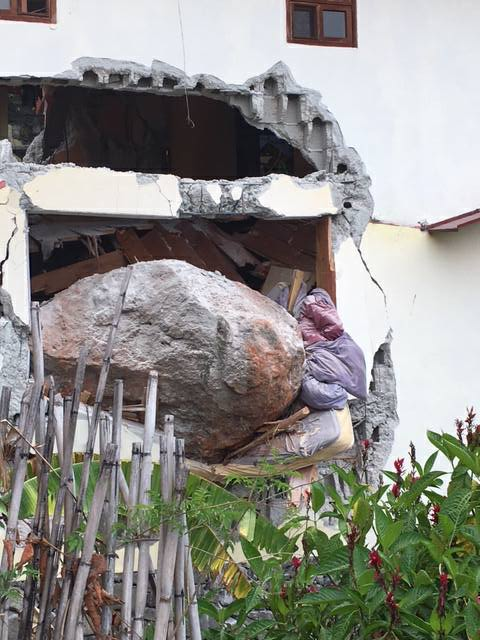
- A large boulder now sat in the kitchen.
- My bed was underneath the boulder.
I concluded that these things were somehow related to my predicament.
For a split second, I entertained the possibility I was dead, underneath the boulder, still tucked (firmly) in bed.
Then the pain kicked in. Pain had a different read on the situation.
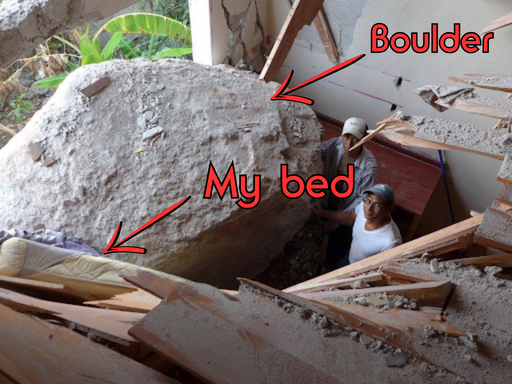 Caption: A couple of Guatemalan friends pose next to the boulder in the kitchen the next day
To understand how a boulder ends up in your bed, and both end up in the kitchen downstairs, you have to understand the week that led to this moment.
Let me back up.
Lake Atitlán, Guatemala. April 15, 2017.
I arrived in Panajachel——a picturesque tourist town on Lake Atitlán in Guatemala's highlands—on Holy Saturday, in the middle of Easter weekend.
I came from Brazil, where I'd just spent three months. But the journey to Guatemala was not straightforward.
In early 2017, Brazil was in the middle of its worst Yellow Fever outbreak in a decade—784 confirmed cases, 267 deaths, spreading through states that hadn't seen the virus in nearly a century.
Guatemala, along with Colombia, Bolivia, Australia, and a dozen other countries, had responded by requiring proof of vaccination from anyone arriving from Brazil.
Mexico had not.
So when the airline wouldn't let me board a direct flight to Guatemala, I flew to Mexico City instead and then into Guatemala.
My gut said something was off. I ignored it. I've ignored my gut maybe 100 times in my life. My gut has been right maybe 100 times.
Science backs it up.
What we call “intuition” is pattern recognition firing below conscious thought. The gut-brain connection is literal. A second neural network, processing what you haven't noticed yet.
One caveat, according to researchers: it gets more accurate the more experience you have.
(The proof: I no longer go to Guatemala.)
No Quiet Nights
On my first night in Panajachel, twelve military helicopters swarmed overhead.
Interpol, it turns out, was looking for Javier Duarte—the former Veracruz governor who'd stolen millions from his own state and vanished.
Duarte and I had just arrived with similar intentions. I was looking for a quiet place to write. He was looking for a quiet place to hide.
Quiet was not on the menu for either of us.
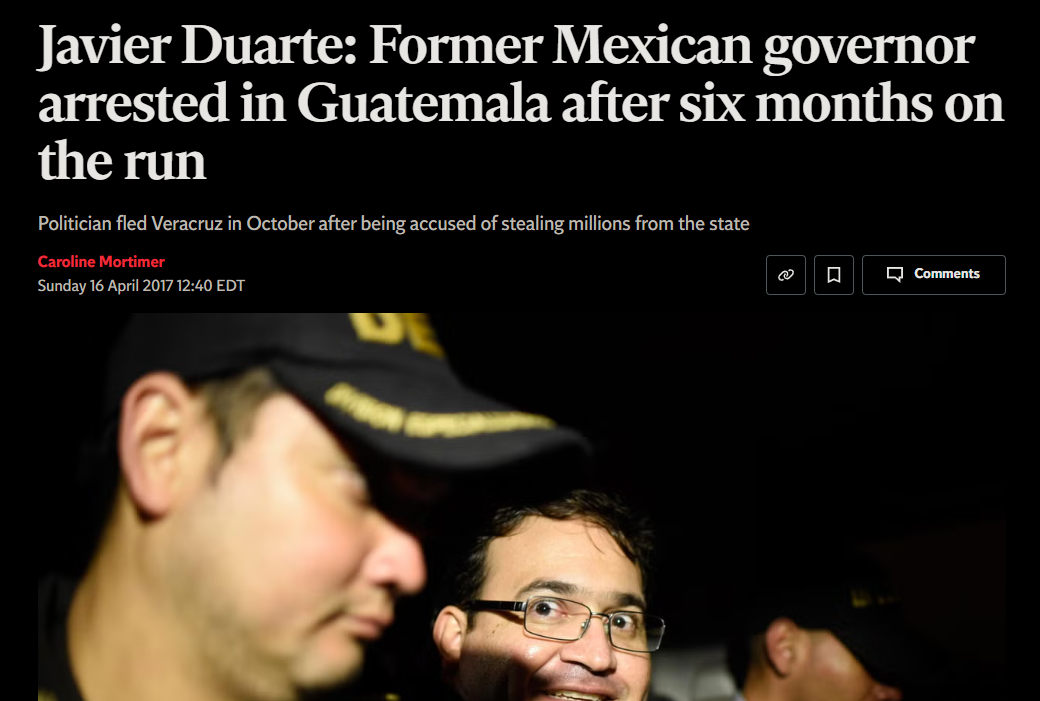
Manuel Noriega, deputy director of Interpol in Guatemala, said Duarte was found at a hotel where he was staying with his wife. I later learned the hotel was uncomfortably close to where I would (try to) sleep that night.
The next day, Duarte was shipped off to a military prison in Guatemala City and I hopped a short boat ride to Paxanax (say it with me: posh-a-nosh)—the "Beverly Hills of Lake Atitlán.”
That’s when I moved into a house designed by my new host: Deva Nirguna.
I Tried. I Really Did.
There's a certain type of Englishman who drifts through life like a barge—unhurried, impossible to reroute, genuinely delighted by everything he bumps into.
Nirguna, an eccentric British architect, is this type.
He also looked like a wizard.
Despite this, or maybe because of it, within four minutes of meeting him, I felt we’d probably been friends for years and simply hadn't gotten around to being introduced. (I like to imagine he’d agree.)
He'd gone to Bartlett—one of the finest architecture schools in the world—and emerged, as he put it, “completely unemployable.”
"I was a hippie," he explained.
Out of college, he decided to follow the Beatles to India, where he spent seven years in Osho's free-for-all commune, immersing himself in spiritual and Tantric practice.
(Indeed, he was an early disciple of the controversial guru of Netflix’s Wild Wild Country documentary. Deva Nirguna was the name given to him by Osho himself, back in Poona, before the Rolls-Royces and scandals.)
He emerged from this experience in India, as he put it, "evenmore unemployable."
From there, he moved to California for 20 years, after which he moved to Lake Atitlán, where he designed and built an estate over the course of three decades.
The estate was on the side of a steep mountain, about 100 steps up from the lake.
That’s where I stayed.
And the place was magnificent.
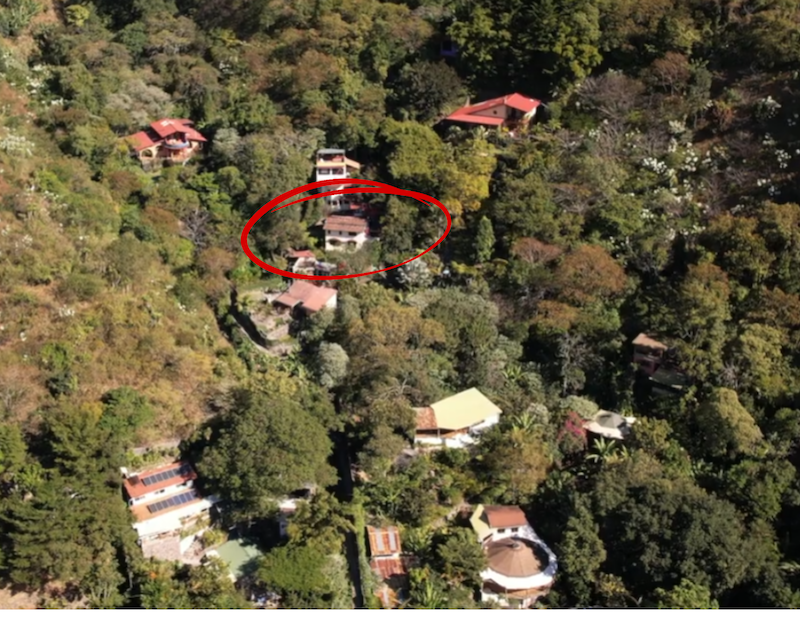
Dramatic footpaths. Wildflowers tumbling over stone fences. Boats rocking in the misty water. Volcano visible from my bedroom window.
A note on the kitchen table that read: "Warning: If you see the volcano erupt... take pictures."
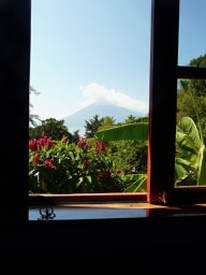
It was a place, in other words, that did not want me to get any writing done.
I tried. Really. I did.
Friday, April 19, 2017. 11:30 AM.
A wildfire broke out along the ridge above the property.
It advanced to within twenty feet of the front door, threatened to consume the house entirely, and put on what Nirguna called “quite a show.”
I was inside the house at the time, wearing headphones and happily typing, having what I thought to be a pretty productive morning.
Nirguna later described what I missed: massive sweeping flames, his neighbor Paul trying to beat them back with a garden hose.
"I just wish I had my camera," he said. "It was a wonderful shot. Paul with his tiny hose against these monstrous flames. Ha!”
Fortunately, the fire was snuffed out. Four strangers appeared, handled it, then disappeared. No one knew who they were.
We later learned the cause: a farmer at the top of the mountain burned his crops and left it unattended.
Nirguna's takeaway: grateful. The neighbors' takeaway: nervous. Rainy season is here. Fires loosen soil. Mudslides are a real concern.
I filed all of this under someone else's problem and kept trying to write.
Sunday, April 23. Around 8:00PM.
The rain had been hammering the roof for over an hour.
I was flat on my back in bed, laptop on my lap, stomach still churning from whatever I'd eaten at the market two days before. (I won’t go into details.)
The sheets were covered in sweat. The room was dark except for my laptop screen.
The first crack up the mountain was sharp. Distant. I thought: transformer?
The second crack was different. Lower. Closer. Much closer.
I looked at the ceiling.
The ceiling looked back—and exploded.
The laptop went. The light went. I felt the mattress drop away and the air rush up and…
… for a long strange moment…
…there was nothing but the sound of the room being annihilated somewhere around me while I drifted through the dark like I weighed nothing at all.
I've told this story a dozen times and I always say I felt I was falling. Because it's easier. Because what I really felt raises questions I can’t answer.
Truth is, I felt like I was pulled. Out of the house. I felt like I was pulled out of the house. That’s the truth.
Have you ever seen someone snatch a tablecloth off a table? I was the tablecloth.
Then nothing.
Silence.
Then—rain. On my arms. On my head. On my back.
Wind.
I looked around. I was outside.
My body scattered next to broken wood and chunks of wall.
One second, I was in bed. The next, I was in the backyard in rubble in complete darkness.
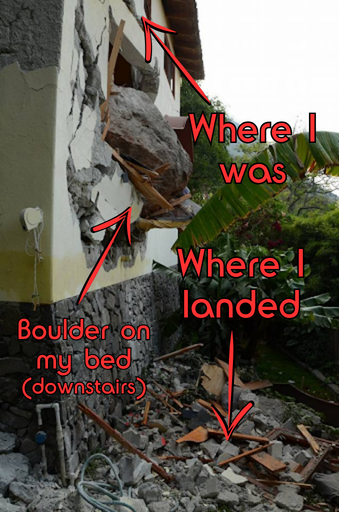
My first instinct, for some reason, was to check my teeth. All there. Good.
My second instinct? Stand up. That’s when I felt it.
Pain.
Weirdly, I couldn’t tell where it was coming from. Just pain.
I assessed the situation. Blood. Everywhere. I catalogued it calmly and stupidly until I reached my leg, at which point calm became the previous thing I felt and stupid stepped into the spotlight.
Seek help, my brain suggested.
“HELP!”
A woman's voice. Somewhere below me, between the trees.
Another voice. A man. Closer. A man at the gate. Voice calm. I stumbled closer to the calm voice.
"It’s Dale, the neighbor. Are you OK?"
"I don’t know,” I said, looking back at the house. I hobbled another step closer. “I think my leg's broken."
"Well," Dale said, shining a flashlight at my leg, "if you're walking on it, it's probably not broken."
He was right. Bloodied, yes. Chewed up, definitely. Broken, no.
We had another problem.
Dale was behind the gate. The gate was locked. Dale wanted to help me, but we needed the gate keys. Dale explained all of this calmly.
“Where are the keys?”
They were inside the house. On the second floor. Somewhere in the wreckage. I explained all of that to Dale, probably not as calm.
Dale handed me his flashlight. I had no choice but to find them.
I walked to the front door. Locked. I picked up a rock. Broke a window and reached in and flipped the lock. The door swung open.
Glass. Wood. Disaster.
Still barefoot, feet bloody and ripped, I carefully walked upstairs.
The left side of the room: untouched except for a thick white dust.
The right side: drone strike.
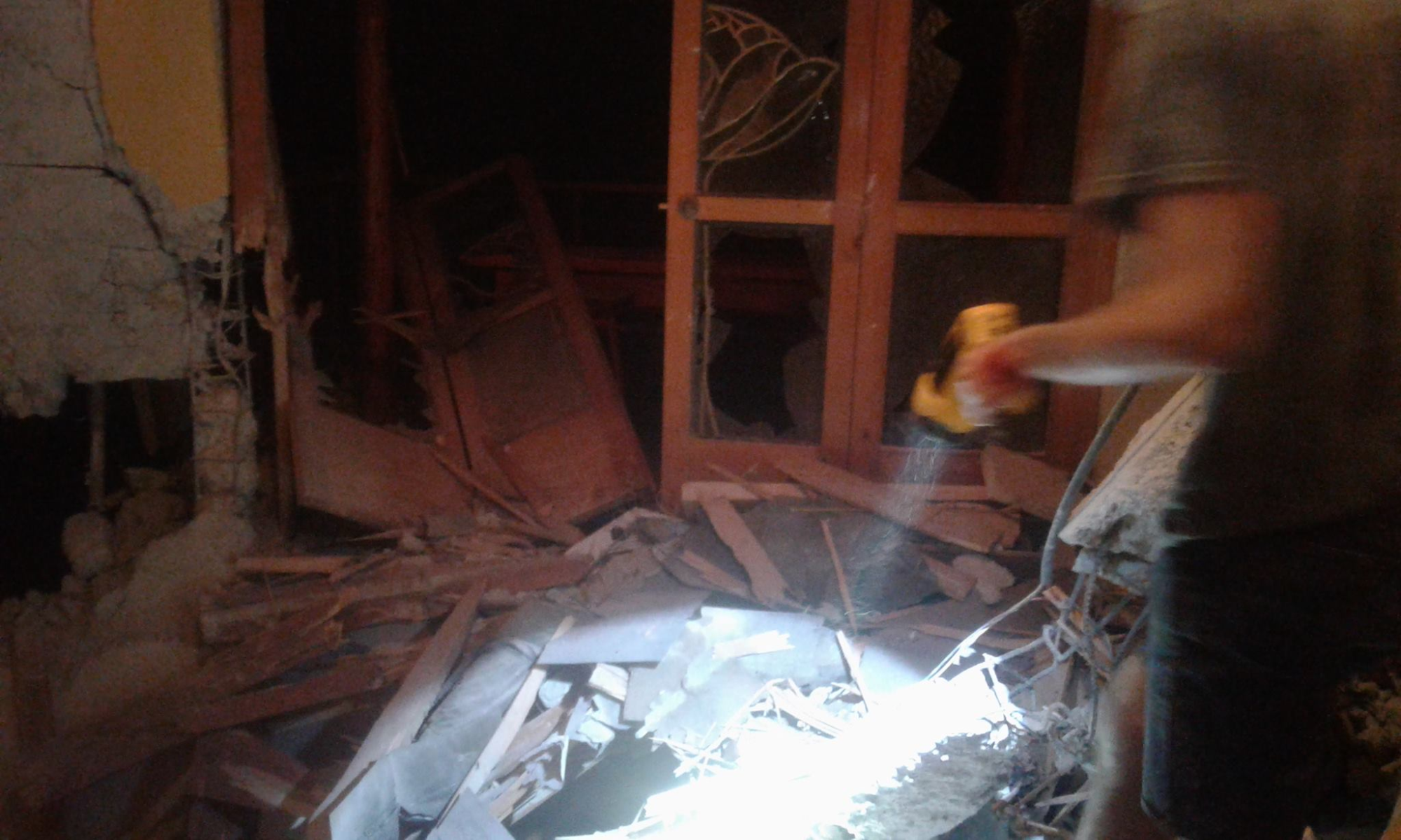 Caption: We went back up an hour later. This is me on the second floor looking down the hole.
Another miracle: I found them. The boulder hadn’t taken them downstairs.
I wrapped a sock around the flap of skin hanging off the bottom of my foot, put my shoes on, and let the tongue soak up the blood. Unlocked the gate. Let Dale in. Or he let me out.
I can’t remember which happened first.
Here's how it happened.
The rock—a very large boulder from up the mountain—came loose after the fire had softened the soil. The heavy rains pushed it over the edge.
It took out a studio up the hill first. Kept going. Bounced off a corner of the upper house. Then came straight through the lower roof.
The roof I was under.
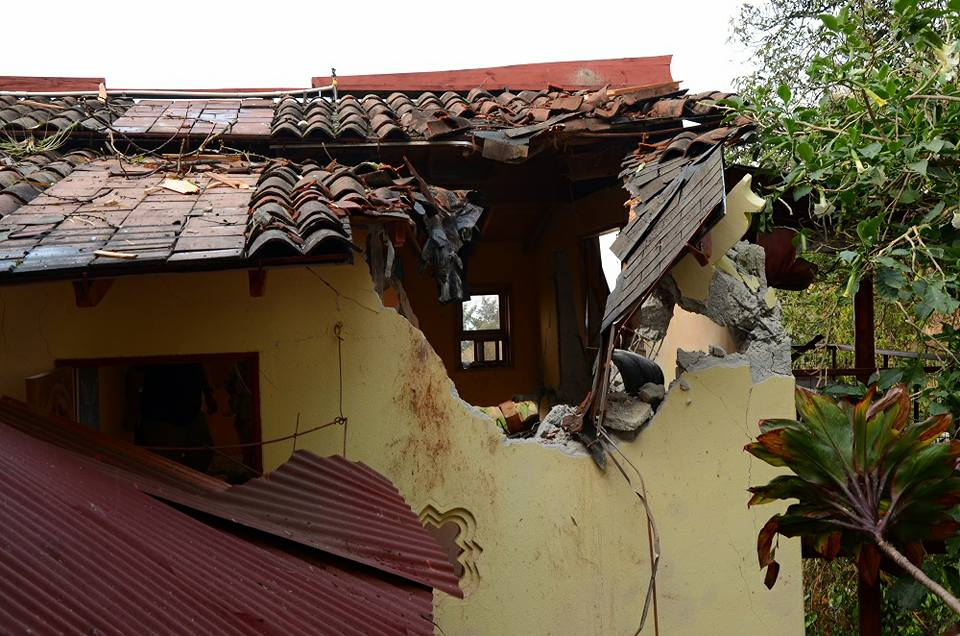
The rock overtook my bed and took it downstairs into the kitchen. You can see it in the photos—my covers still caught in the rock's maw.
As for how I ended up outside?
My ego says instincts kicked in and I somehow gracefully and willfully slid my way out.
My ego, as usual, is probably wrong.
The next morning, Dr. Wang arrived.
Calm. Everyone is so calm here.
He looked me over. Left me with a bag full of antibiotics, bandages, cream, and peroxide.
Then he said:
"You're in the best possible scenario," he told me, "for the worst possible scenario."
"Huh?" I said.
"You're going to be OK."
Important things I found.
My glasses, found in the kitchen. Tiny scratch on one lens.
My laptop, also found in the kitchen. Cracked screen. I pressed the power button.
It turned right on.
I wrote this on it.
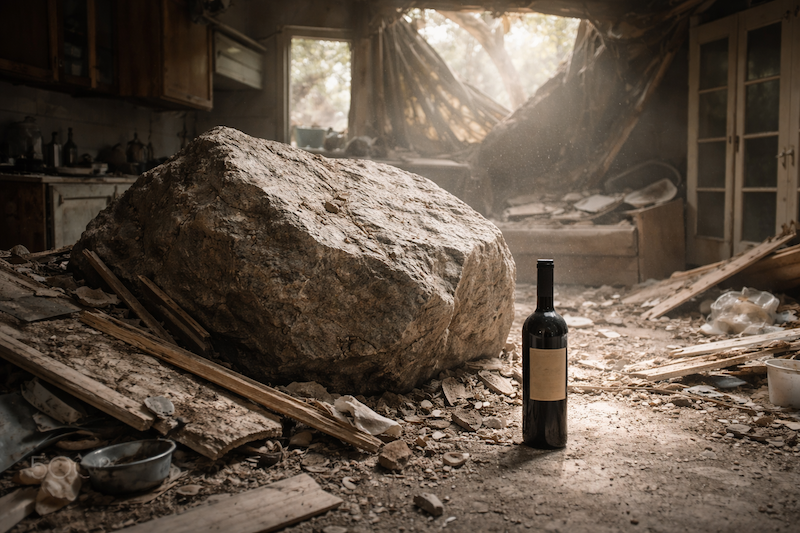
A bottle of wine I'd bought at the market the day before was still sitting on the kitchen table—right next to the boulder. Unruffled. Covered in dust. Otherwise fine.
Nirguna brought the bottle to the neighbor's house, where I'd been couch-ridden on account of my leg swelling to the size of a novelty ham.
"Might as well, right?" he said.
"Why not?" we agreed.
He poured our glasses. A few people who hadn't known me a week or so ago. All a little shaken. Each in our own way.
"Cheers," someone said.
"To life," Nirguna said.
To life, I said, taking a sip.
I was going to be OK.
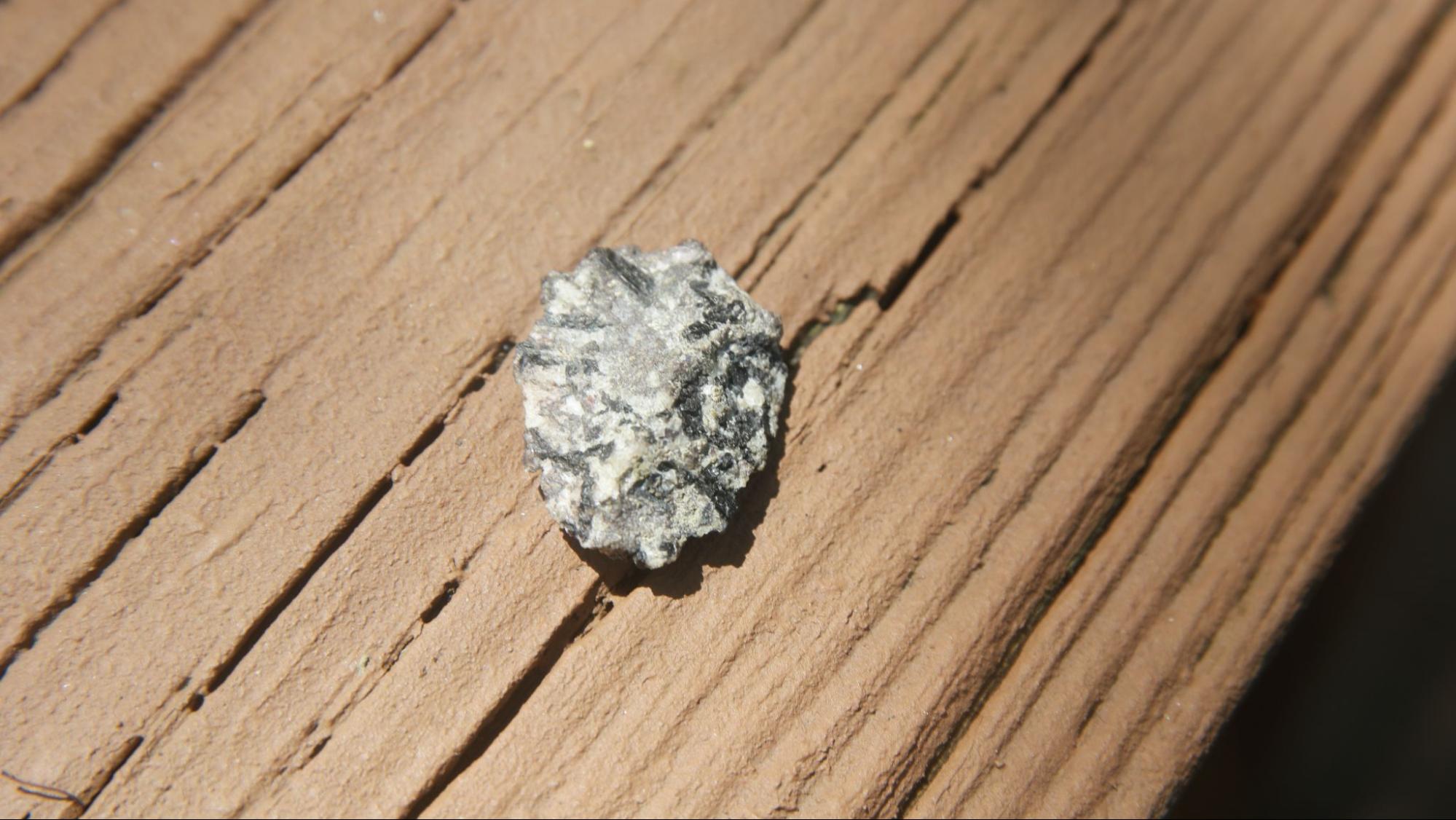
Update: Nirguna later sent me this. A piece of black tourmaline from within the boulder. The tables have turned, boulder!
Enjoy your Easter weekend.
Everything’s going to be OK.