The Grid Goes to Hell

Posted July 06, 2026
Chris Campbell
Solar and wind are great…
Provided your server is comfortable taking the occasional nap.
So it’s no surprise that, when it comes to AI, renewables have been a major letdown.
That's not the popular line in many circles—especially those tinged green—but look at what the machines actually need…
AI data centers run around the clock. Inference, the everyday work of answering prompts, is now 80-90% of AI's power draw, and it never stops.
No nights off. No calm-wind days. Just a constant, brutal, always-on appetite for electricity.
Solar runs about a quarter of the time. Wind, maybe a third. The sun sets on your AI model every single night, and the grid can't paper over the gap—interconnection queues in Northern Virginia, Phoenix, and Dallas now stretch four to seven years.
"OK. Just add batteries," they say.
But even after battery prices fell 45% in a single year, the economics at hundred-megawatt scale—by the industry's own admission—remain challenging.
So Big Tech reached for something else.
Nuclear
Microsoft is restarting Three Mile Island. Amazon is pouring money into small modular reactors. Clean, firm, always-on—on paper, the perfect answer.
I recently read a book called, Earth is a Nuclear Planet.
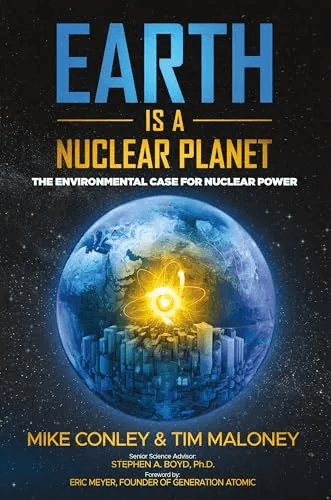
It convinced me. Nuclear is great. But there's a problem: It's not coming fast enough.
No commercial small reactor is running in America yet. The one design that cleared regulators hit cost overruns and delays.
Large reactors take five to eleven years to build. Even the small ones need four to six—and US nuclear projects run 2.6 times over on cost and schedule, according to the IEA. Vogtle, the last big build, took a decade and more than $30 billion.
Nuclear runs $6,400 to $12,700 a kilowatt to build. Natural gas runs $3,000. Of course, we could always build more natural gas power plants.
But that also comes with a hitch: turbine manufacturers are advising developers to plan 8 years ahead to secure equipment.
The machines need power now. "Wait a decade" is not an answer.
Which brings me to the part almost nobody's talking about.
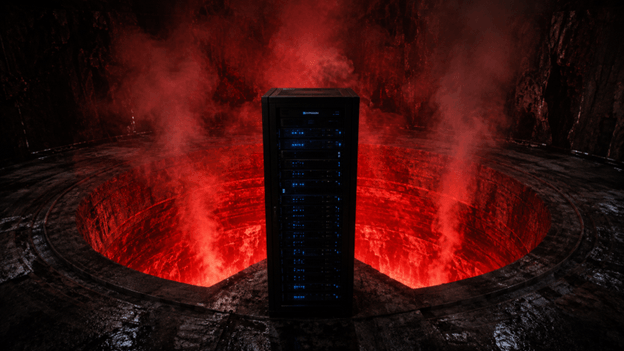
The Grid Goes to Hell
There's one renewable that runs 24/7/365. Better than 90% of the time, weather be damned—because it doesn't care whether the sun's up or the wind's blowing.
It's firm. It's clean. And it's already feeding data centers today.
How? By utilizing the places where the Earth’s deepest heat seems close enough to call hell by name.
For a century it sat trapped in a few volcanic corners of the map.
Then a group of engineers took the exact drilling technology that unleashed the shale boom and aimed it straight down—unlocking this energy almost anywhere on Earth.
The numbers are big and growing.
New estimates suggest it could supply up to 25% of America’s electricity by 2030. One stretch of the American West alone holds enough to power a tenth of the country.
It would be the fastest major buildout of clean, round-the-clock power the country has ever seen.
But the BIG question: Will it work?
Well… one thing: Washington just tilted the board. The 2025 tax law phased out the credits for wind and solar—and left this one untouched.
And, finally, the biggest tell: The same tech giants scrambling for power are quietly funding this instead. Google. Nvidia. Bill Gates.
They see what's coming.
Right now, there's only company built to own this trade—the only scaled, publicly traded pure-play in the game. And there's a specific catalyst coming later this year that could re-rate the whole thing.
I've put the name, the ticker, and the full analysis on this week's Ticker Tuesday list.
If you’re already part of our VIP text list, expect it tomorrow.